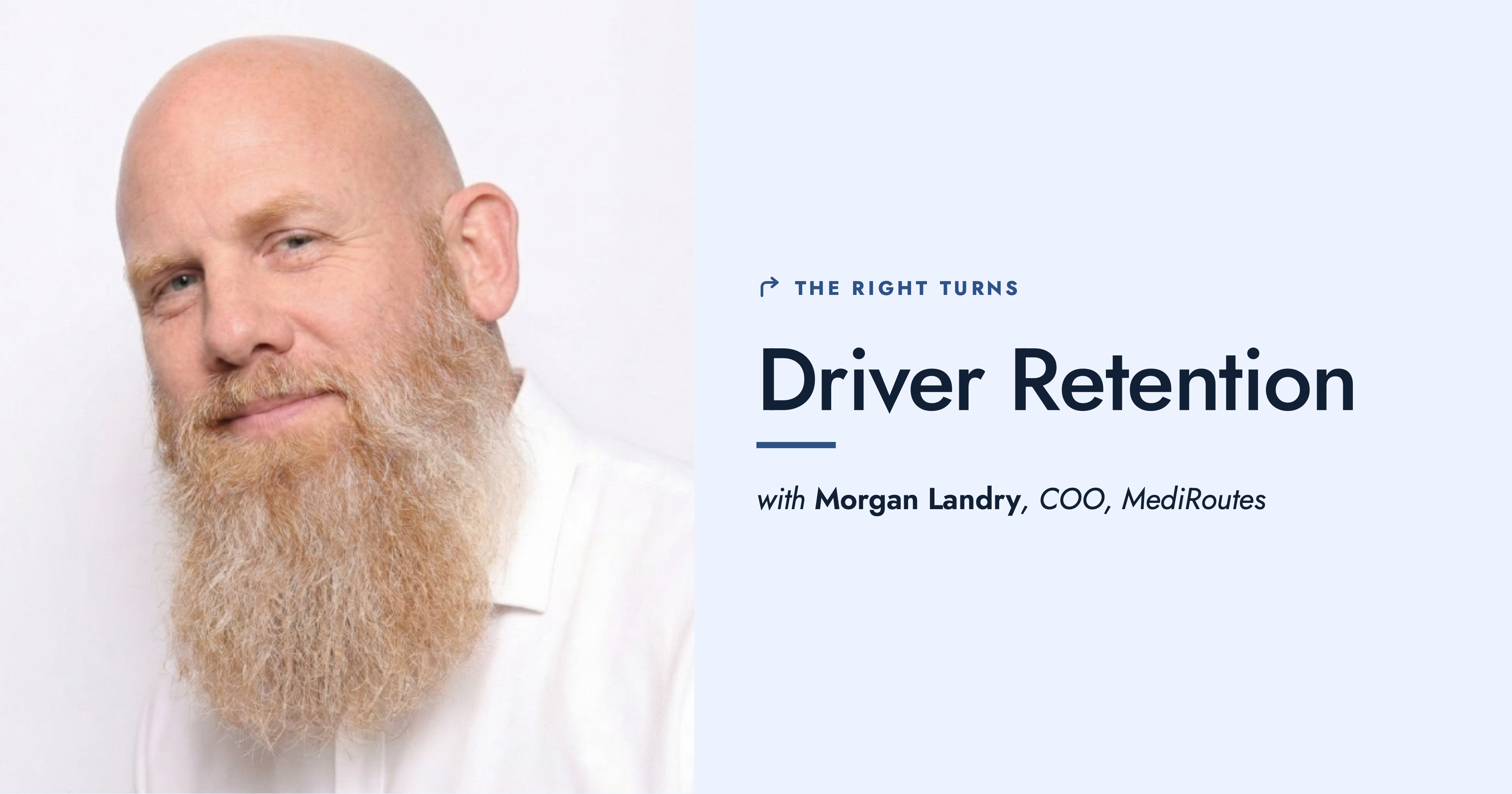
Provider. Broker. Software. Morgan has seen the NEMT industry from every angle. This series is your inside scoop into Non-Emergency Medical Transportation: honest answers and actionable advice to help you navigate the chaos and scale your business.
If you’ve been in NEMT long enough, you’ve probably said some version of this out loud:
“Good drivers are hard to find.”
That’s true. But what’s harder is keeping them.
Vehicles don’t matter without drivers. Contracts don’t matter without drivers. Growth doesn’t happen without drivers. And losing a good driver hurts more than almost anything else in this business.
I started in NEMT back in 2012. I’ve hired hundreds of drivers, trained drivers, lost drivers, and learned the hard way what keeps the good ones around.
Why Drivers Actually Quit
Yes, pay is important, but it only gets people in the door. Drivers rarely quit solely over money; they quit over confusion and chaos.
- Unpredictability:They get beaten down when schedules change so much they can’t plan their personal lives.
- Inconsistency:They leave when rules aren’t fair or consistently applied.
- No Future:The biggest reason drivers quit is when they don’t see a path forward.
If a driver doesn’t know what “good” looks like, how they earn more, or what gets them in trouble, they’re guessing. Guessing leads to frustration, and frustration leads to turnover. And turnover means you have to drive every day instead of growing your company.
Aligning Goals: The Clear Path
I believe strongly in aligning company goals with employee goals. When those two things point in the same direction, people move with you instead of against you.
We were very clear about our path. We avoided favoritism and vague promises by setting hard targets:
- 6 Months:If a driver had no accidents, few complaints, and good on-time performance, they earned a significant raise.
- 1 Year:Another increase.
- 2 Years:Another increase.
Drivers knew exactly what behavior led to more money. This saved us money in the long run by reducing overtime and the high cost of constantly training new hires.
Culture is What You Celebrate
We also rewarded team performance, not just individuals. Every 30 to 60 days accident-free, we cooked for the whole team.
That was our way. Not because feeding drivers is some magic trick, but because it built pride and accountability. Drivers reminded each other to be careful because it affected everyone.
At staff meetings, we handed out cash prizes for going above and beyond—looking sharp, helping another driver, keeping the van spotless. People notice what you celebrate. If the only time drivers hear from management is when something goes wrong, that’s all they associate the job with.
Where to Find Drivers: The "Go to Church" Strategy
When it comes to hiring, I’ve told countless companies the same thing over the years: “Go to church.”
It’s half a joke, but the idea behind it is solid.
Go where people already belong to a community. Churches, community centers, volunteer groups, local events. Places where people show up regularly and know each other. That’s where you find people who care about being reliable, who value consistency, and who are connected.
Some of the best drivers I ever hired didn’t come from job boards. They came from the community.
The Power of Referrals
In one case, it started with one driver. He was a retired Department of Public Works employee. Solid guy, always early, always professional. He didn’t need a career; he just wanted to stay active and do something that mattered.
A few weeks in, he said, “I’ve got a couple of friends who might be interested.”
One turned into four. Those four drivers ended up being some of the best we ever had. They were friendly with riders, on time, and professional. They treated the job like adults because that’s who they were.
What I learned from that experience was simple: Good people know other good people.
When you hire from a community—especially retirees or people active in their neighborhoods—referrals matter more than resumes. Those drivers held each other accountable without us having to say much. Nobody wanted to be the one making the group look bad.
Training & Respect
Finally, training is where most companies lose drivers. New drivers don’t quit because the job is hard; they quit because the first few weeks feel chaotic.
Good training isn’t about memorizing rules. It’s about confidence. It’s knowing where to go, who to call, and what to do when something goes sideways. If your answer to every question is “figure it out,” don’t be surprised when they do—somewhere else.
Respect ended up being the biggest retention tool of all.
- Drivers notice how dispatch talks to them.
- They notice whether rules are applied evenly.
- They notice who gets blamed when something goes wrong.
Good drivers want accountability, but they also want fairness. If everything is always the driver’s fault, they won’t stay long.
Meet Morgan: The Guy Who’s Sat in Every Chair
- The Provider: Started in the trenches, managing and growing a fleet to become the largest private fleet in the state.
- The Broker: He took a 13-van fleet and scaled it into the state's #1 operator for Medicaid brokers. Managed operations for a nationwide NEMT broker, gaining a behind-the-scenes understanding of how trip placement and performance work.
- The Software: Now at MediRoutes, he helps owners improve dispatch and operations using the exact strategies that scaled his own career.